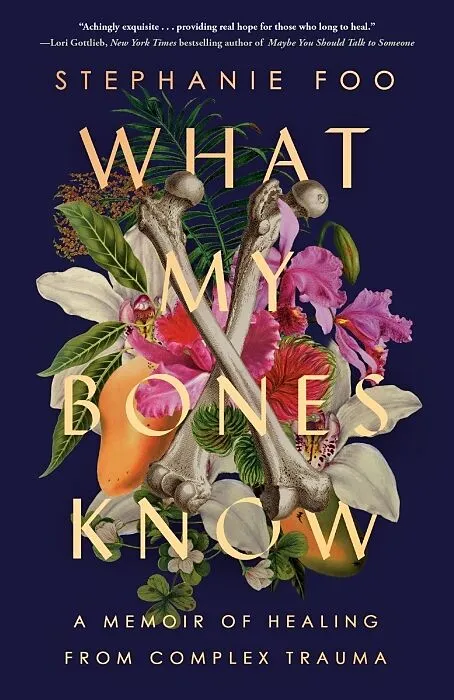
What My Bones Know
Beschreibung
Informationen zum Autor Stephanie Foo Klappentext NEW YORK TIMES BESTSELLER • A searing memoir of reckoning and healing by acclaimed journalist Stephanie Foo, investigating the little-understood science behind complex PTSD and how it has shaped her life A...Format auswählen
- Kartonierter EinbandCHF 22.70
Wird oft zusammen gekauft
Andere Kunden kauften auch
Beschreibung
Informationen zum Autor Stephanie Foo Klappentext NEW YORK TIMES BESTSELLER • A searing memoir of reckoning and healing by acclaimed journalist Stephanie Foo, investigating the little-understood science behind complex PTSD and how it has shaped her life Achingly exquisite . . . providing real hope for those who long to heal.Lori Gottlieb, New York Times bestselling author of Maybe You Should Talk to Someone ONE OF THE BEST BOOKS OF THE YEAR: The Washington Post, Cosmopolitan, NPR, Mashable, She Reads, Publishers Weekly By age thirty, Stephanie Foo was successful on paper: She had her dream job as an award-winning radio producer at This American Life and a loving boyfriend. But behind her office door, she was having panic attacks and sobbing at her desk every morning. After years of questioning what was wrong with herself, she was diagnosed with complex PTSDa condition that occurs when trauma happens continuously, over the course of years. Both of Foo's parents abandoned her when she was a teenager, after years of physical and verbal abuse and neglect. She thought she'd moved on, but her new diagnosis illuminated the way her past continued to threaten her health, relationships, and career. She found limited resources to help her, so Foo set out to heal herself, and to map her experiences onto the scarce literature about C-PTSD. In this deeply personal and thoroughly researched account, Foo interviews scientists and psychologists and tries a variety of innovative therapies. She returns to her hometown of San Jose, California, to investigate the effects of immigrant trauma on the community, and she uncovers family secrets in the country of her birth, Malaysia, to learn how trauma can be inherited through generations. Ultimately, she discovers that you don't move on from traumabut you can learn to move with it. Powerful, enlightening, and hopeful, What My Bones Know is a brave narrative that reckons with the hold of the past over the present, the mind over the bodyand examines one woman's ability to reclaim agency from her trauma. Leseprobe Prologue Do you want to know your diagnosis? I blink and stare at my therapist. She gazes at me from her serene office, where sunshine glows through her gauzy curtains, birdsong bursts through the windows, and one of those little fountains with a giant marble on it burbles, which I guess is supposed to be relaxing. In the back of the room is a framed copy of the poem Desiderata. You are a child of the universe, no less than the trees and the stars; you have a right to be here. But I'm not really here . My therapist's warm office is in San Francisco, and I am in my dark, freezing, six-by-six-foot office in New York City, talking to her through a small window on my computer. The reason I know about the poem in her office is the same reason I can't believe she is only telling me my diagnosis now: I've been her client for eight years. My sessions with my therapist, whom I'll call Samantha, began when I was twenty-two, when I lived in San Francisco and needed help with a very San Francisco problem: an INTJ tech-nerd boyfriend. I lucked out with Samantha. She was acerbic and clever but loving. She'd always make time for an emergency session after a breakup and even bought me a beautiful leather-bound travel journal before my first solo trip abroad. My sessions with her quickly moved beyond boy talk, and we began discussing my monthslong bouts of depression and my constant anxiety around friendships, work, and family. I loved her so much that I kept seeing her via Skype after I moved across the country to New York when I was twenty-six. Our session today begins with me complaining about my lack of focus. Samantha asks me to do some positive visualizations and suggests I picture myself in...
Autorentext
Stephanie Foo
Klappentext
**NEW YORK TIMES BESTSELLER • A searing memoir of reckoning and healing by acclaimed journalist Stephanie Foo, investigating the little-understood science behind complex PTSD and how it has shaped her life
“Achingly exquisite . . . providing real hope for those who long to heal.”—Lori Gottlieb, New York Times bestselling author of Maybe You Should Talk to Someone**
ONE OF THE BEST BOOKS OF THE YEAR: The Washington Post, Cosmopolitan, NPR, Mashable, She Reads, Publishers Weekly
By age thirty, Stephanie Foo was successful on paper: She had her dream job as an award-winning radio producer at This American Life and a loving boyfriend. But behind her office door, she was having panic attacks and sobbing at her desk every morning. After years of questioning what was wrong with herself, she was diagnosed with complex PTSD—a condition that occurs when trauma happens continuously, over the course of years.
Both of Foo’s parents abandoned her when she was a teenager, after years of physical and verbal abuse and neglect. She thought she’d moved on, but her new diagnosis illuminated the way her past continued to threaten her health, relationships, and career. She found limited resources to help her, so Foo set out to heal herself, and to map her experiences onto the scarce literature about C-PTSD.
In this deeply personal and thoroughly researched account, Foo interviews scientists and psychologists and tries a variety of innovative therapies. She returns to her hometown of San Jose, California, to investigate the effects of immigrant trauma on the community, and she uncovers family secrets in the country of her birth, Malaysia, to learn how trauma can be inherited through generations. Ultimately, she discovers that you don’t move on from trauma—but you can learn to move with it.
Powerful, enlightening, and hopeful, What My Bones Know is a brave narrative that reckons with the hold of the past over the present, the mind over the body—and examines one woman’s ability to reclaim agency from her trauma.